There's a post going around right now — maybe you've seen it. It says you can run Claude Code for free: install a free tool, paste in a couple of settings, and you're done. No subscription, no bill. All of it is technically true. And all of it leaves out the one thing you'd actually want to know.
Claude Code is two things
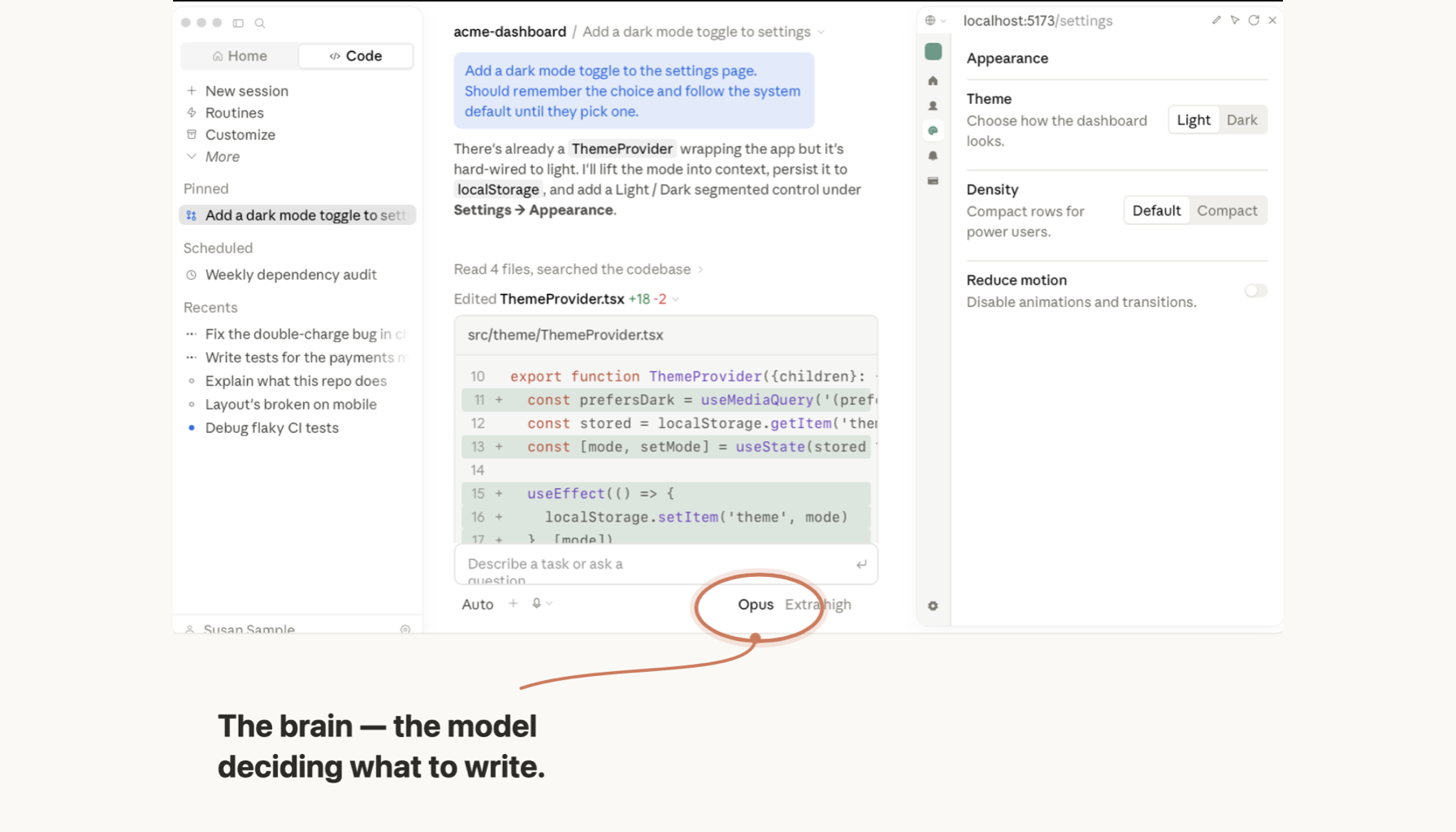
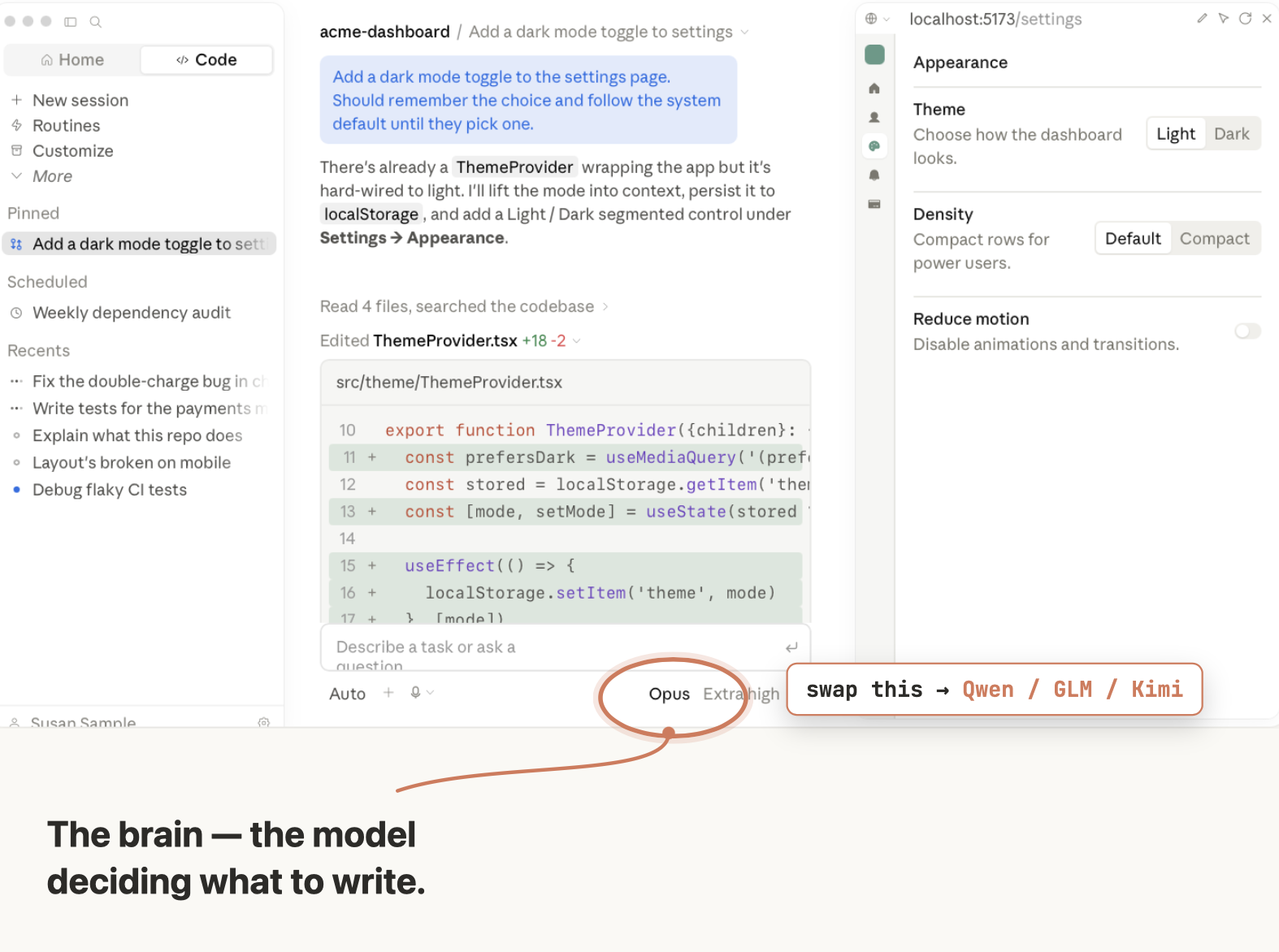
Most people think of Claude Code as one product. It isn't — it's two, and they come apart. There's the shell: the part on your screen. It opens your files, writes the changes, runs the commands, and shows you what happened. That's the part that does the work. And there's the brain: the model deciding what to write. Look at the bottom of the window, where it says Opus. That's the brain.
The free setup keeps the body. And swaps the mind.
So what are you actually running?
Qwen. Or GLM. Or Kimi. Good models — genuinely. But not Claude, and not close to Opus on the hard problems. You kept the car and replaced the engine. That's not free Claude Code; it's Claude Code's dashboard with somebody else's model underneath.
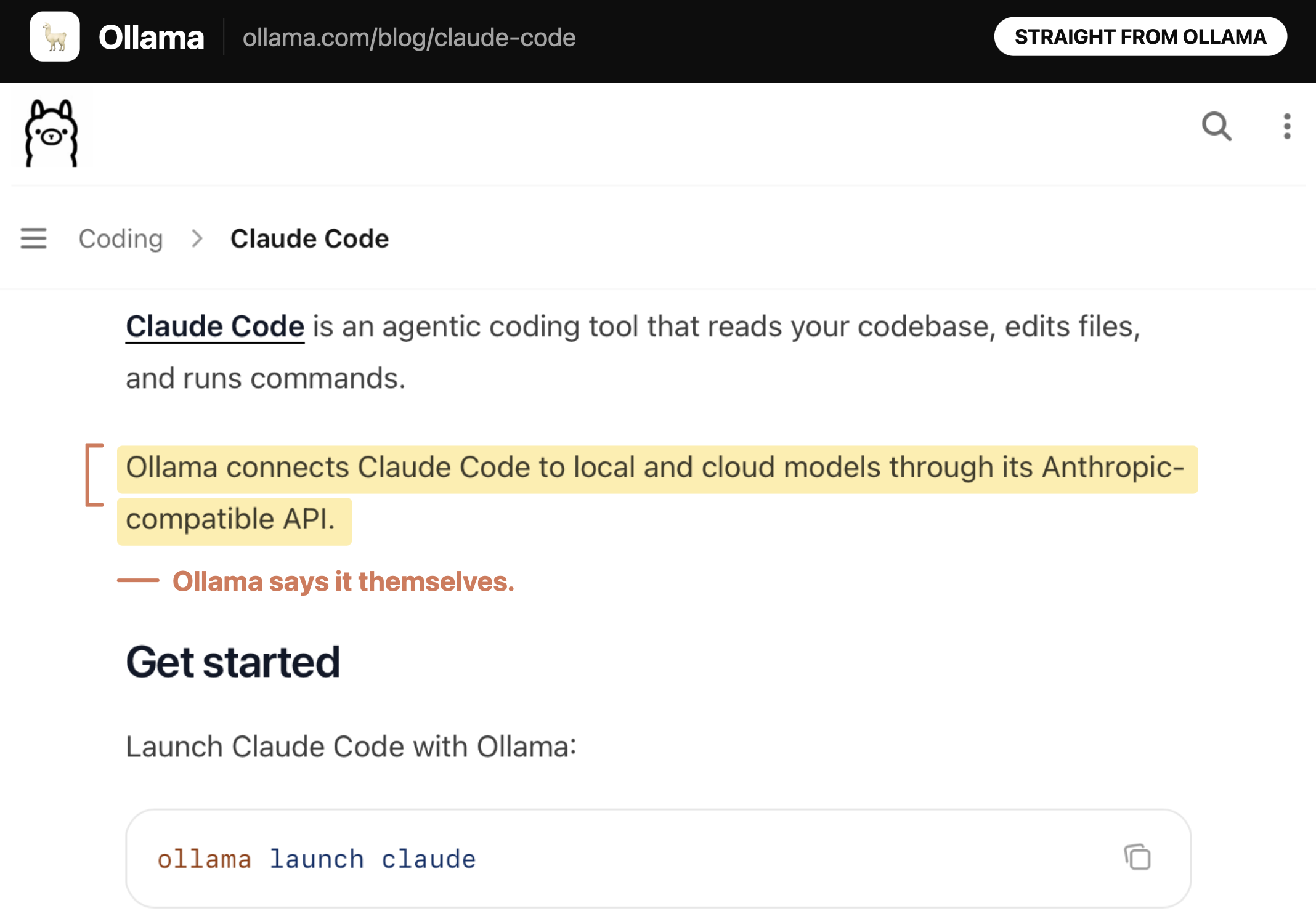
And to be fair to Ollama — the company behind this — they never claimed otherwise. Their documentation is clear about exactly what it does.
Three things the videos skip
- It's not a hack. One command runs the whole setup. It's documented and supported. Nothing shady here — the problem is the headline, not the tool.
- "Local" often isn't local. Ollama runs models on your machine, but it also runs them in the cloud — and a lot of those demos use the cloud version. That means your code is still leaving your computer, and the free tier runs out. Two very different things wearing the same word.
- Free still costs you. Running a model on your own machine takes a real machine — around 16GB of memory before it gets painful. And the file-editing you were excited about only works with certain models; pick the wrong one and the shell you kept starts failing at the exact thing you kept it for.
Weaker brain, weaker everything.
You kept the car. You replaced the engine.
Dr. Erin JacquesWould I use it?
If I hit my usage limit in the middle of something? Yes. It's a real option, and I'd rather you know it exists than not. But I'd know what I traded. That's the actual skill here — not memorizing tools, but understanding what a tool is made of, so nobody can hand you a swapped part and call it the original.
That's the whole game inside my community, Leveraging AI — understand how these tools really work, then use them to build AI web apps people pay to subscribe to. No code required.

Dr. Erin Jacques is a professor of informatics at the City University of New York and the founder of Leveraging AI and ChatifyIT, where she helps people build and monetize AI-powered web apps people pay to subscribe to.
Get AI News Weekly
How to build and monetize with AI, in one short email.